Here are some of my images from college.

I have been lucky enough to returned to education as a mature student to study fabric design. In the past have made my own clothes, knitted garments and altered clothes to make them up to date or look different. Always taken an interest in fashion, fabric and the construction of garments. Also attended a jewellery design and making course working in silver and gold and still wearing some of my pieces today but gave most of them away as presents ! Spent alot of time restoring old furniture for my home instead of buying new and had some unique stuff !!


Sunday, 12 May 2013

The Jouer Presentation.

      We met in room 114 Chatham and there was other Play groups there as well. We sat and watched each group do their presentation which I found interesting listening to their idea's.
 Unfortunately there was only three of our group for the presentation. Leahna was ill and Ollie well, maybe  he was busy !!


First play group's Presentation and very good one too. 

Other groups sat listening to the presentation.

Jacob checking his notes for the presentation.
Jacob's laptop ready for our presentation. 

Another very good presentation.

This is our presentation. Jacob did a film to check what you
 can fit into 175 seconds, and very funny it was.

Safia was next to do her bit and also to cover Leahna's idea's as well.
Again she gave a very good performance. Next my turn ...... they were not very
impressed with my luggage tags I had sprayed with paint!! Anyway after
a lot of discussion a few ideas were put forward for me to think about,
which I will take on board....... I haven't really worked out
what I will do with my tags but I'm sure I will get a good idea soon when I
start putting them together . 

Wednesday, 8 May 2013

Emily Pankhurst.

 For unit X I have been researching the Alumni of the Manchester art school from 1838 to 2013. While researching this brief I came across Emily Pankhurst had attended Manchester Art School in 1882 and  had studied art. So I thought I would do some artist research on her but unfortunately I cannot find any of her actual art work, but of course she was a very interesting person in her own right. So decided to write about her on my blog.


 The Petticoat Revolution. Gouache on paper.
 20th century. Private collection. Artist unknown.


 Emily Pankhurst.

 Emily Pankhurst campaigning.


 Emily Pankhurst was born in Manchester on July 15, 1858. Emily was born into a family who had tradition for radical politics, and she stepped into that mould becoming passionate campaigner for women's rights to vote.
In 1878, she married Richard Pankhurst, leader barrister, who was at the time 24 years older than her. Richard Pankhurst was a supporter of the women's suffrage movement. Together they had five children his death in 1898 was a shock to Emily. It was after his death that she threw herself into the suffragettes movement forming the Women's Franchise League in 1898. In 1894, she was elected a poor law guardian and she spent time visiting workhouses in Manchester becoming aware of the shocking levels of poverty many faced. Emily Pankhurst had this to say " I thought I have been a suffragist before I became a  Poor Law Guardian but now I began to think about the vote in women's hands not only as a right but as a desperate necessity."
It was in 1903 she formed the more militant Women's Social and Political Union. It was through the political action of the WSPU that the term women's suffragette movement was created. She was a leader of a passionate group of women who were willing to take part in drastic action by being tied to railings, smashing windows and launching demonstrations and in one case one woman threw herself under the Kings horse and died for her beliefs. Emily Pankhurst defended the militant tactics on the grounds that " The condition of our sex is so deplorable that is our duty to break the law in order tocolour tensions to the reasons why we do"
the government and establishment were shocked at the tactics of the women and many were arrested. While in prison they would go on hunger strike and they were force-fed already and released only to be re-arrested when they were in better health which was known as " Cat and mouse". In 1912 Emily Pankhurst was convicted of breaking windows and was sent to Holloway prison. While in prison she went on a hunger strike in protest about the appalling conditions, prisoners were kept in. She describes a time in prison" like a human being in the process of being turned into a wild beast"
In 1918 women over the age of 30 were given the vote by 1928 women were granted equal voting rights with men at 21. However in 1928 Emily Pankhurst fell ill and died.
It is thanks to Emily Pankhurst and her group who enabled us to vote. Today we take it for granted all the freedom us women have and we must always remember the women who campaigned for us.

So I'm very privileged to think that I am attending the same art school as Emily Pankhurst who changed the way of life for us women.


The only document in Manchester Metropolitan University Special Collections for Emily Pankhurst. 

Monday, 29 April 2013

Ossie Clark


Ossie Clark.
Ossie Clark was born  Raymond Clark in Liverpool 9th June 1942. The name Ossie came from when he was evacuated to Oswaldtwistle, Lancashire during the Second World War. Ossie studied at Manchester Art School in 1960. In 1962 Ossie Clark was awarded a scholarship to the Royal College of Art in London. Where he graduated three years later – the only student to have been awarded a  First Class honours degree. Clark had impressive cutting skills and had the extraordinary productive collaboration with his wife the textile designer Celia Birtwell. He was spotted by Vogue's Marit Allen who printed a picture of Ossie and a model wearing one of his graduation pop art dresses and were photographed by David Bailey( photographer)in 1965.
 Dressing coat 1970. Ossie Clark.
 Celia Birtwell's print "floating Daisy."
Ossie Clark

Twiggy wearing Ossie Clark's outfit.

Wedding dress 1971. Clark said wedding dresses
"the most vital part is the back". Here the back features
dramatic fun pleating falling from a raised waistline.

Ossie Clark  1985.
.
 Dress 1971. This dress
was cleverly pieced together
from two different lengths of fabric,
a small multicoloured floral print and bolder red poppy print. They coil round the figure into continuous strands. Print by Celia Birtwell.
 From the mid 1960s to the mid-1970s Ossie Clark dressed the famous and the fashionable in showstoppers outfits. But since then, Clark's glamorous lifestyle and tragic death in 1996  have overshadowed his importance as a dress designer.


1969
1970   Chiffon dress.
 The back of a wool coat 1970.


 Strawberry embroidered lounge suit
1971


 Snake skin bomber jacket 1967.

 Costings for a outfit 1973 – 74.
Ossie Clark in the 1960s – 1970s one of the most influential dress designers of that time. He made Mick Jagger's stage outfits and Jaggers wife Bianca wore the most extravagant  designs of his.
Ossie Clark's vintage designs are still very sought-after and a lot of them are privately owned.  V&A  had a exhibition showing his designs in 2003. I just wished that I could have gone to see that exhibition because in this 1960s we all wanted a Ossie Clark's dress !

Thursday, 25 April 2013

Unit X another meeting.

 By using Facebook we contacted each of the group to arrange a meeting last Tuesday. One of the media boys couldn't attend the meeting and sent a text.  At the meeting there was just the three of us the Leahna, Safia and me. We met up to see how each of us are proceeding with the 175 Manchester Art School brief.


Leahna discussing the brief in the group meeting.

Safia checking our Facebook for messages. 

Me thinking about my part of the brief.
 As usual we had a good meeting and we knew what direction each of us proceeding with. Unfortunately one of the other media guys didn't turn up! But that didn't stop us from discussing the forthcoming exhibition. I think we are fortunate that the three of us communicate and work together easily. Later we had a tutorial to explain what each of us are doing and how we are intermingling our work with each other. So each of us will have something that the others have done to show in the final exhibition.

Anna Douglas

Attended the Anna Douglas lecture about collaboration.

Collaboration-  work with combination - this is the meaning in the dictionary.

Anna Douglas- collaboration- means awareness of working together.

Working together is about the ability to communicate, problem-solving, brainstorming ideas, be generous with others and not keep all good ideas to oneself. Some people need to learn how to work together and for others it comes easily. It is putting one's ego aside, which is not easy for some people as they always want to be in charge. So, it is important to respect other's ideas, other ways of working and  having  the desire to work together. Once everybody knows what they're doing, breakdown the task into modules and then the individuals can work on their own.                                                                                                                                                                                                                                                                                                                                                                                                                                                                                                                                                                                                                                                                
The lecture was about how artist's showing their work, need to work with other professionals to set up and record their work. In any gallery exhibition how many people would it take to set the exhibition up? The artist with his work, the manager of the gallery, decorator to paint the gallery the colour required for the exhibition and the person who is actually going to hang the exhibits on the wall or place them onto the stands and that's only the start! Think of all the people working behind the scenes of an art gallery and without these people the art gallery could not function.
I think Anna Douglas's lecture was interesting in the fact that working together is not always an easy option. I think anyone who is thinking of working together as a group and takes note of the above ideas, I think it would help them to work in a group successfully. Many thanks to to Anna Douglas for the lecture.

Sunday, 21 April 2013

Object Pattern Making.

The Object Pattern making Workshop.


The  group ready to start the object pattern making workshop. We needed cartridge paper, masking tape, scissors, craft knife, ruler/square/pattern master, pencil, black felt tip pen and a camera. As you can see I have bought a glass bottle to cover.


Cut the masking tape into strips and place onto a cutting board.


Cut the strips in half using the ruler.


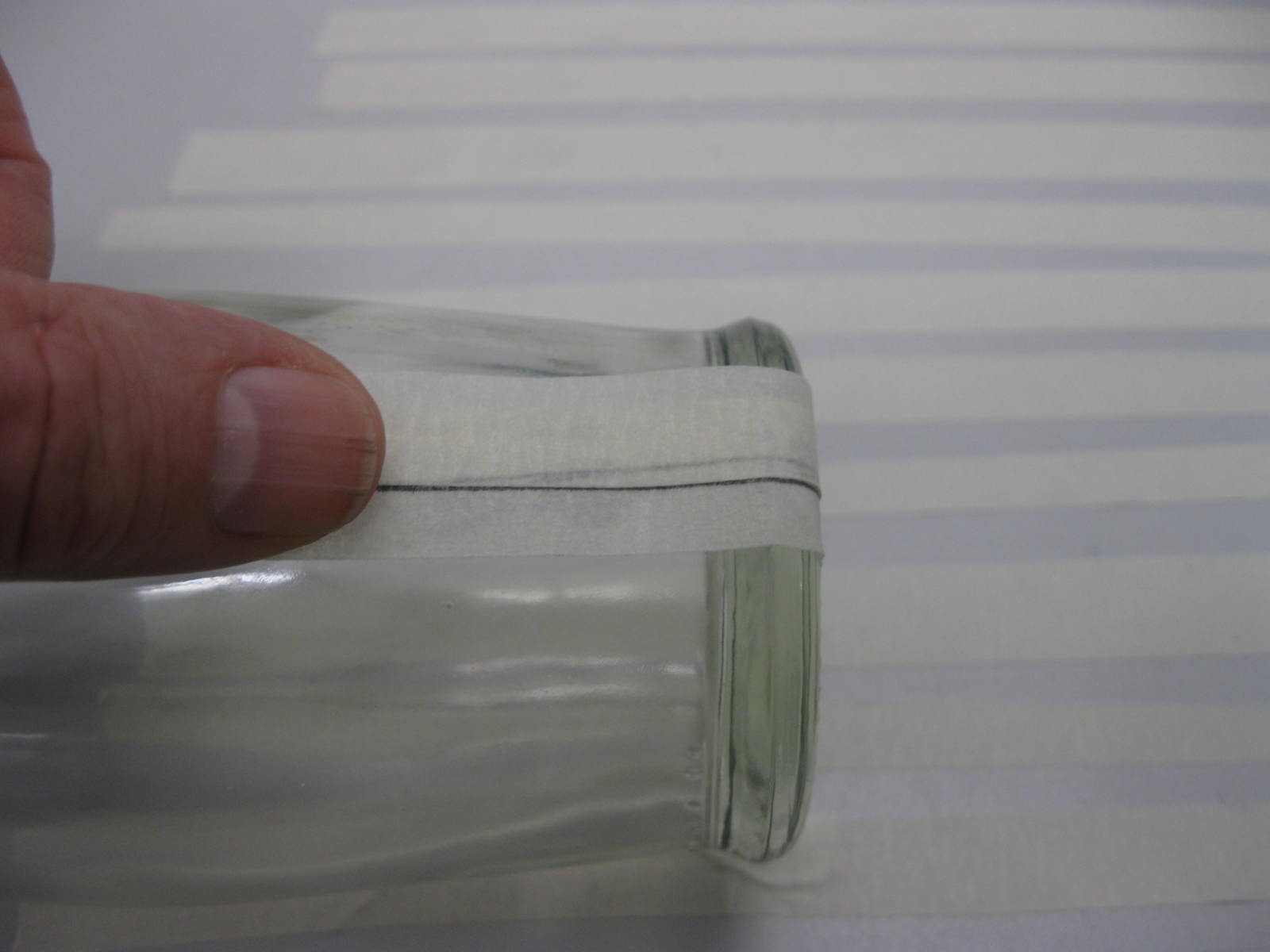
 Mark one of the narrow strips the black line along the centre
and place onto the object to be covered.


 Take the next strip and place it alongside the marked strip as in the picture
above.


 Keep wrapping object from top to bottom until fully wrapped.
Then start wrapping the masking tape around the object as
in the photograph above.


 When the object is fully wrapped ( two layers) as above.
Then mark where you're going to cut the tape off. See picture
above.


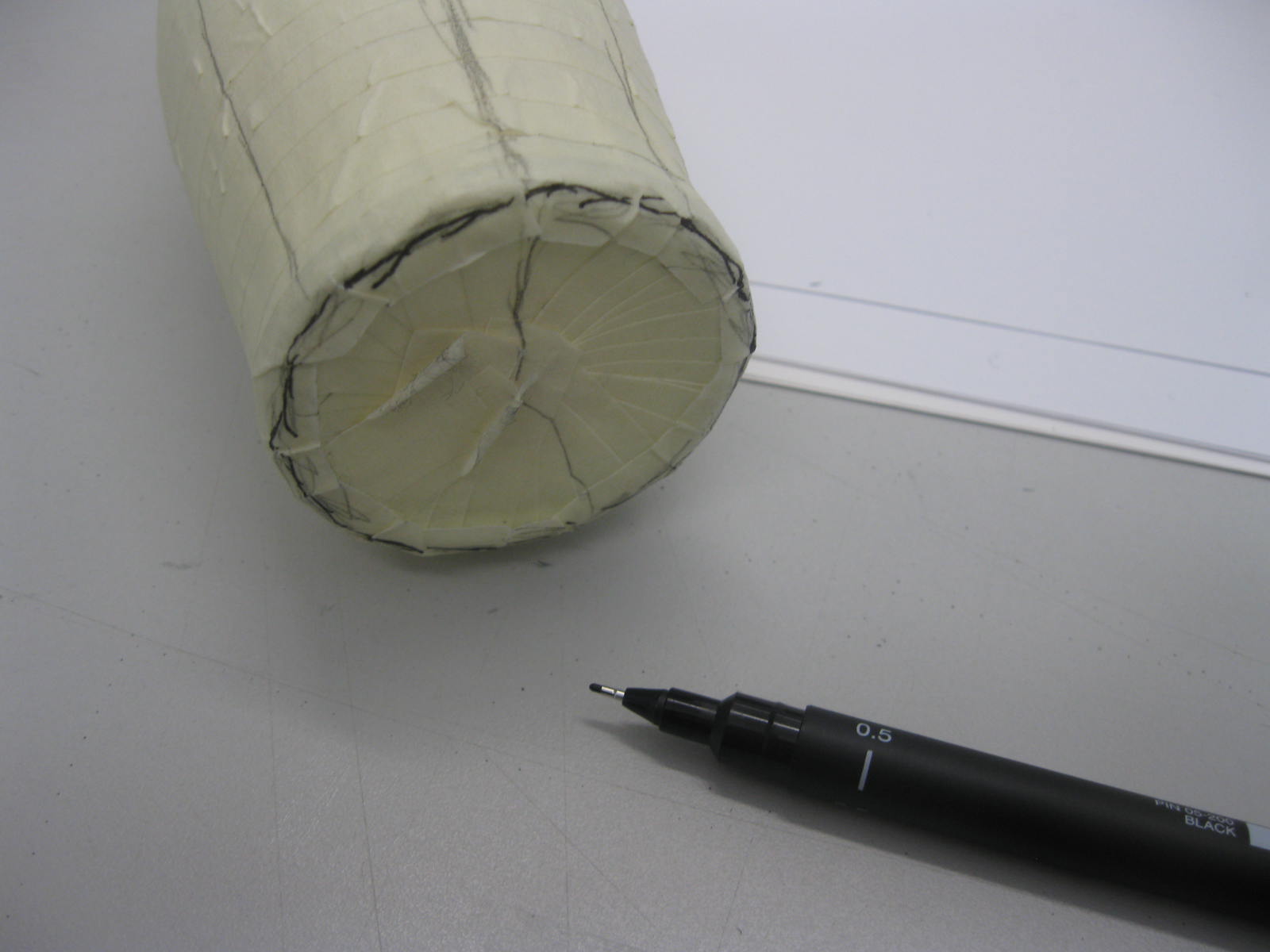
 Mark from the bottom of the object first with pencil and then
with the fine black felt pen.


 Mark the object with lines as shown in the photograph above.
 

 Mark lines with numbers so you can rejoin
the pieces together after they have been cut.


 Now with a craft knife you start cutting along the lines
through the masking tape which can be quite difficult
because it's quite thick in places so you need a sharp
craft knife.


 When you finish cutting out the shapes flatten them as much
as you can. Then place them onto a piece of paper and
cut them out. To finish the process you need to place the
cut out paper shapes onto pattern paper, making an allowance
all around the seams. To recreate the object in fabric you then cut
 the pattern shapes out in fabric, sew the seams and hey presto, a cover
for your object !!!

Pattern Cutting Zero Waste.

  This lecture was about developing patterns and losing the 15/20% of cutting waste of the fashion industry as this waste goes into landfill sites. Designers are looking at ways to reuse the waste, creating new garments or using the scraps as a form of embellishment.
Designers are now looking at the historical patterns/styles where they would wrap the fabric round the body using a geometric shape. By using geometric block patterns this reduces seams and the amount of sewing causing the fabric to drape on the body.
These are a few designers who are using this technique.
Holly McQuillan. She uses several patterns drawn into a piece of fabric.
Julia Lumsden.  A student of Holly McQuillan above. She designs menswear and I quote  "through the pattern comes the design" and uses the scraps of fabric as a form of embellishment.
David Telfer. He uses minimal seam cutting so there's less seams to sew and again block cutting.
Joe O'Neill. He is a high Street designer who also is into zero waste, again uses block cutting.
Most of the designers are now looking at zero waste when designing fashion and their idea's behind this is, pattern shapes, fabric manipulation, wraparound, so the excess fabric drapes elegantly and the geometric shape fits beautifully on the figure.
Pattern versus design, the pattern shape dictates the design of the garment but in this process it is often the fabric that dictates the design ! The difficulties are, what hangs well, compromising is the key,  fabric manipulation and evaluating the pattern at each stage.
I listened to this lecture with great interest, because in the past I have made my own clothes, so I know about manipulating fabric and design but I feel that even using these block patterns you are driven by the fabric you use. Using a different fabric like linen you would still have waste by having to cut the fabric into a shape and not into blocks. By cutting the linen into blocks you would still have to shape the blocks as the linen would not drape! I'm not sure that this idea really works because you would have to use flowing soft fabric and the amount of fabric that actually goes into the making of the garment to make it drape is more than the fabric you would lose by cutting it into shape! So my final conclusion is, initially you would have less waste in landfills but looking at it long term when the garment comes to the end of it's life, you would end up with more fabric in the landfill because you used more fabric in the first place !!