Here are some of my images from college.

I have been lucky enough to returned to education as a mature student to study fabric design. In the past have made my own clothes, knitted garments and altered clothes to make them up to date or look different. Always taken an interest in fashion, fabric and the construction of garments. Also attended a jewellery design and making course working in silver and gold and still wearing some of my pieces today but gave most of them away as presents ! Spent alot of time restoring old furniture for my home instead of buying new and had some unique stuff !!


Sunday, 21 April 2013

Object Pattern Making.

The Object Pattern making Workshop.


The  group ready to start the object pattern making workshop. We needed cartridge paper, masking tape, scissors, craft knife, ruler/square/pattern master, pencil, black felt tip pen and a camera. As you can see I have bought a glass bottle to cover.


Cut the masking tape into strips and place onto a cutting board.


Cut the strips in half using the ruler.


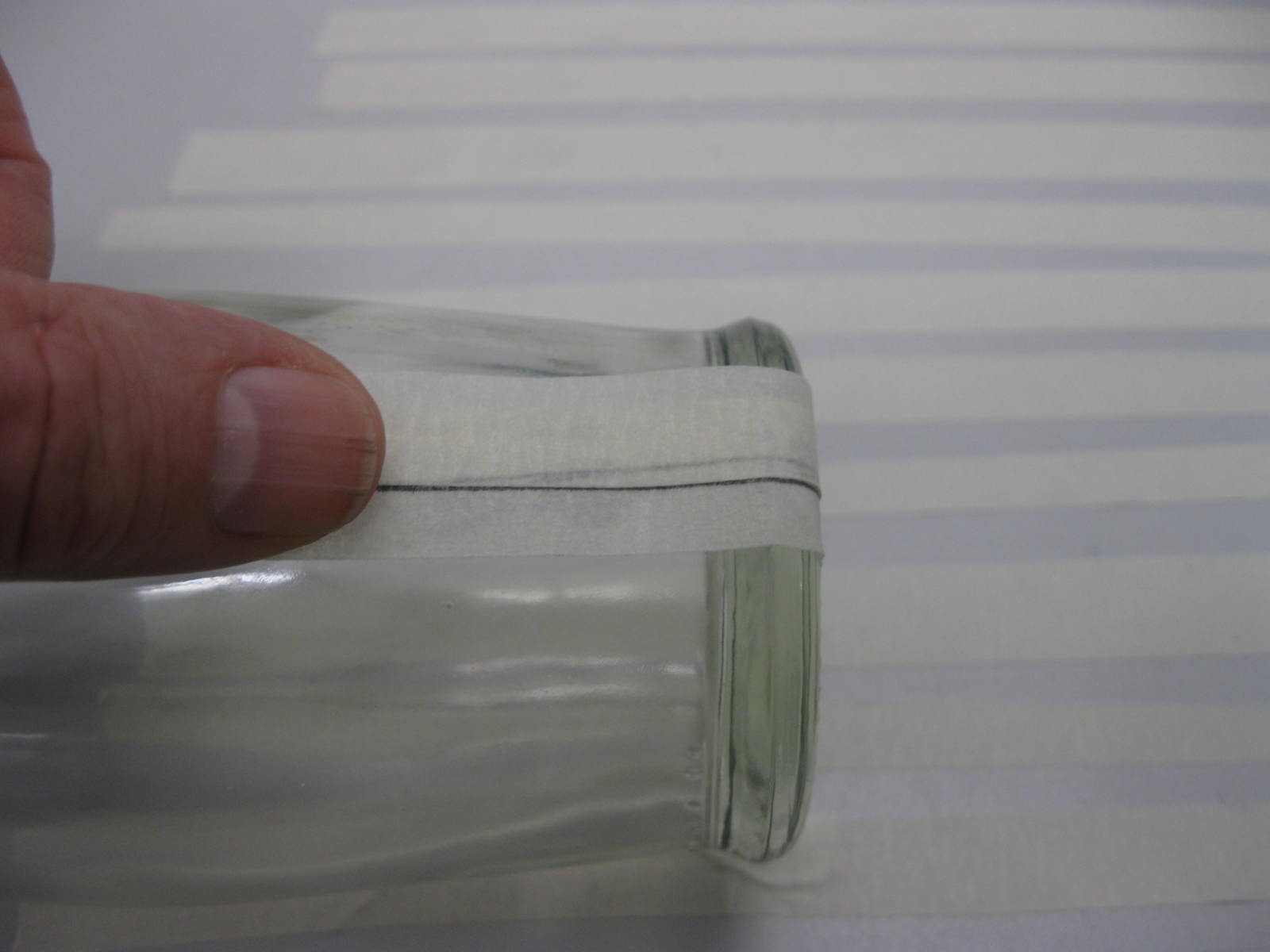
 Mark one of the narrow strips the black line along the centre
and place onto the object to be covered.


 Take the next strip and place it alongside the marked strip as in the picture
above.


 Keep wrapping object from top to bottom until fully wrapped.
Then start wrapping the masking tape around the object as
in the photograph above.


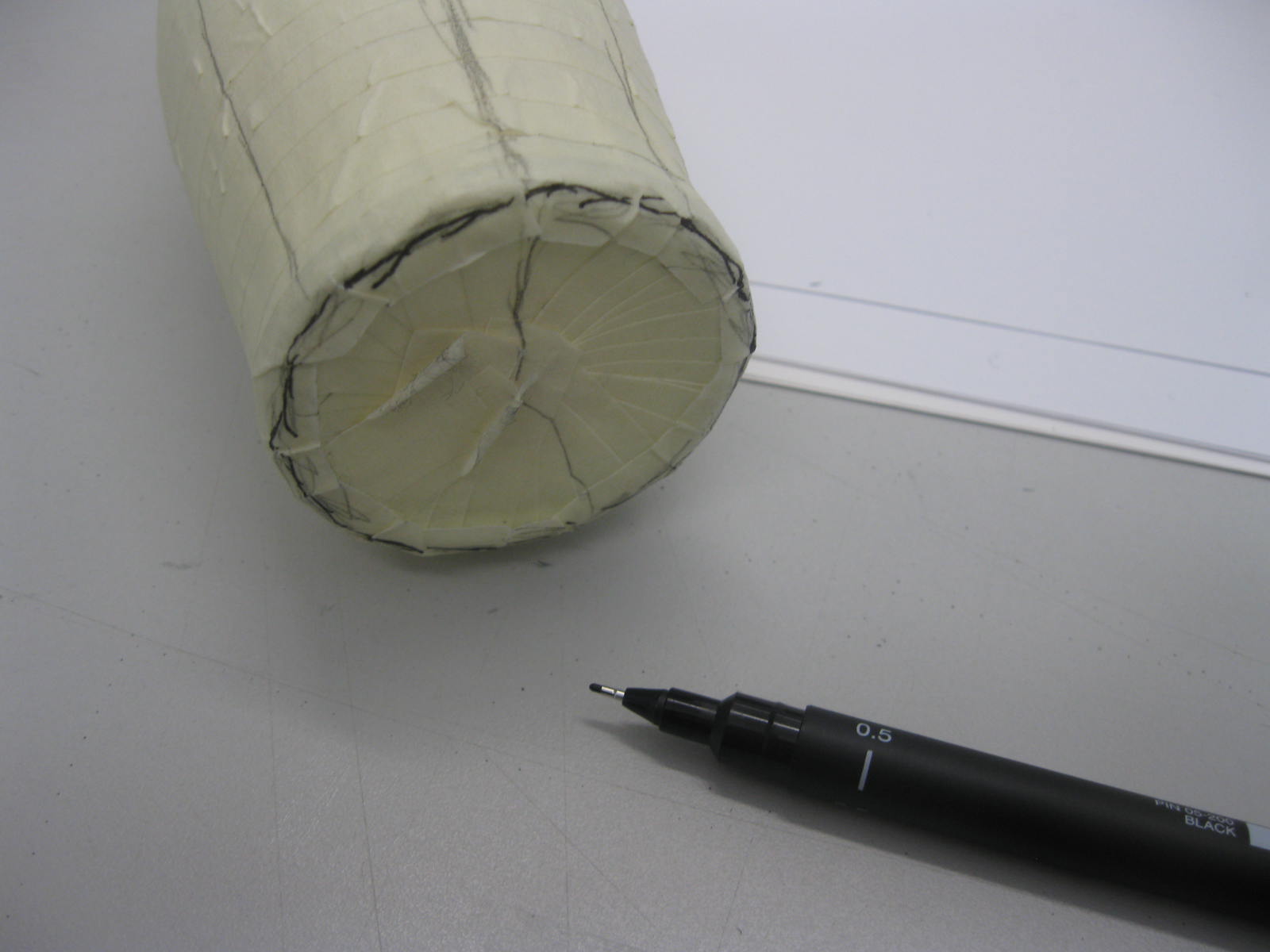
 When the object is fully wrapped ( two layers) as above.
Then mark where you're going to cut the tape off. See picture
above.


 Mark from the bottom of the object first with pencil and then
with the fine black felt pen.


 Mark the object with lines as shown in the photograph above.
 

 Mark lines with numbers so you can rejoin
the pieces together after they have been cut.


 Now with a craft knife you start cutting along the lines
through the masking tape which can be quite difficult
because it's quite thick in places so you need a sharp
craft knife.


 When you finish cutting out the shapes flatten them as much
as you can. Then place them onto a piece of paper and
cut them out. To finish the process you need to place the
cut out paper shapes onto pattern paper, making an allowance
all around the seams. To recreate the object in fabric you then cut
 the pattern shapes out in fabric, sew the seams and hey presto, a cover
for your object !!!

Pattern Cutting Zero Waste.

  This lecture was about developing patterns and losing the 15/20% of cutting waste of the fashion industry as this waste goes into landfill sites. Designers are looking at ways to reuse the waste, creating new garments or using the scraps as a form of embellishment.
Designers are now looking at the historical patterns/styles where they would wrap the fabric round the body using a geometric shape. By using geometric block patterns this reduces seams and the amount of sewing causing the fabric to drape on the body.
These are a few designers who are using this technique.
Holly McQuillan. She uses several patterns drawn into a piece of fabric.
Julia Lumsden.  A student of Holly McQuillan above. She designs menswear and I quote  "through the pattern comes the design" and uses the scraps of fabric as a form of embellishment.
David Telfer. He uses minimal seam cutting so there's less seams to sew and again block cutting.
Joe O'Neill. He is a high Street designer who also is into zero waste, again uses block cutting.
Most of the designers are now looking at zero waste when designing fashion and their idea's behind this is, pattern shapes, fabric manipulation, wraparound, so the excess fabric drapes elegantly and the geometric shape fits beautifully on the figure.
Pattern versus design, the pattern shape dictates the design of the garment but in this process it is often the fabric that dictates the design ! The difficulties are, what hangs well, compromising is the key,  fabric manipulation and evaluating the pattern at each stage.
I listened to this lecture with great interest, because in the past I have made my own clothes, so I know about manipulating fabric and design but I feel that even using these block patterns you are driven by the fabric you use. Using a different fabric like linen you would still have waste by having to cut the fabric into a shape and not into blocks. By cutting the linen into blocks you would still have to shape the blocks as the linen would not drape! I'm not sure that this idea really works because you would have to use flowing soft fabric and the amount of fabric that actually goes into the making of the garment to make it drape is more than the fabric you would lose by cutting it into shape! So my final conclusion is, initially you would have less waste in landfills but looking at it long term when the garment comes to the end of it's life, you would end up with more fabric in the landfill because you used more fabric in the first place !!

Saturday, 20 April 2013

Special collection exhibition of Mr Dedman's Victory Suit.

The Booklet.
I went up to special collections at the University for enquiry and much to my delight I came across this exhibition:  Mr Dedman's Victory suit: Intimate stories of make do and mend.
What a delightful exhibition this is. I would most certainly recommend the textile students to go and have a look. It's about World War II in England and also the clothes rationing in Australia.

The back of the booklet.
Crochet.


A crochet shawl.


War time Journals on show.

Patterns.

Television installations. 

Posters


Panties and stockings.

Dress patterns
Another of the exhibits.
This is small selection of the exhibition. There is a  darning basket belonging to Beatrice (1935-1945)  skirt made from patchwork squares maker unknown. Handbag covered with small felt flowers. Apron made of patchwork hexagons with a flowered waistband, again maker unknown. And utility stockings these are fascinating to look at and they still have the utility mark stamped on the foot in black. There are many other objects to see and it gives you a glimpse into the women's life during the world War II.

Unit X The Art School.

During my research of Manchester Art School, I wanted to know what the original colours for the art school  were. So I went to special collections and asked if they could help me and a very nice gentleman called Jeremy Parrett said yes, he was sure there was a document available and would email the documents to me.  Below is the image of 175 names I will be using for Unit X.
 This is a list of the staff andAlumni from 1938. 


 And this is the document that was sent to me from special collections.

This is from the " Calendar of the Municipal School of Art"  1913 – 1914

and this is the earliest reference to school colours that can be found.

 These are the colours that I will be using as part of unit X. Unless of course they

do not fit in to what I am doing !

Some more Unit X

 Jouer Group we all met at Hilton House to make some more posters and to finalise the ideas we have for unit X. We are very fortunate to all get on well as a group and appreciate each other's qualities that they bring with them. At the moment we are only meeting once a week as we all know what we are going to do. Leahna, Safia and myself have decided to work from home as we think we will be far more productive. Leahna and I both travel each day. I spend three hours plus a day to get to Manchester Art School and I feel I can spend more time on unit X and Blogger than I would if I came into Manchester.


 Above are the photographs I have taken at our last meeting of our group working in Hilton House. There is Leahna, Safia,  Jacob, Ollie and me behind the camera.

Unit X

Over Easter I spent some of my time doing 175 research and recorded them into a sketchbook. I have to say, I found loads of information on 175 – did you know the University of Westminster is 175 years old  and you can't score 175 with three darts on a dart board! Also it takes three hours for a train to travel 175 miles at a average speed of 58:33MPH and 175 
anniversary is called seploqiunquecentennial....... say that !!!!!!


 The Beetle 175 turbo


175  Portobello Road.

 This is what 175 staples look like.


 This is what 175  knots  look like tied into string


 So, I've got loads of useless information about 175

Mark Nelson at the Storey Gallery

I was invited to the Storey Gallery for a exhibition opening " A Northern View" by Mark Nelson a urban artist.

 The decoration inside the Storey Gallery.
 This is another image from the stairs leading to the main gallery.

 Photograph of Mark Nelson's  pictures hanging in the gallery.
 This is one of the many paintings in the exhibition.
One his many portrait/ caricature face paintings.

 I've not heard of Mark Nelson before, so I was quite intrigued, and went to see his work. His work was very much of the samey with the towns and landscapes. Some of the paintings were of actual places of Lancaster and surrounding areas, others of Liverpool, Ribble Valley but some of them were a figment of his imagination. The face paintings were something different, not like real people more of caricature image I think some were actual people as the paintings had a name!  The pictures were very vibrant and I can see they will be good, commercial art. I personally wouldn't want one hanging on my wall, but that's is my opinion. I did notice there was a younger element of non artists at the opening and hardly any of the Lancaster artists who usually attend these exhibitions openings !

                                      --------------------------------------------------------------


As I was getting ready to leave the Storey Gallery I noticed an exhibition of  contemporary digital art by Neil Eckersley entitled " City skyscrapers and Feelings of the Soul". Contemporary digital artwork on  his iPad.
 New York skyscrapers.


 I thought these digital works were very playful and quite liked them. I know a few people that do digital art on their iPads. My partner he uses his iPad to draw local musicians playing their instruments in the Lancaster area. Of course, it was David Hockney who first made digital art created on the iPad respectable and not something just to doodle on.


 The Storey Gallery is a hub of activity where local artist's work is shown.
The tourist information is situated in the same building. Also there is a
very nice cafe and restaurant, which is  actually called Nice where they
serve very nice cakes, snacks and meals including gluten-free goodies much
to my deligh.